
Building brain capital through nervous system regulation at scale.
Dr. Justin Feinstein's decades of interoception and neuroscience research revealed something that clinical science had been missing: a way to measurably shift the nervous system out of chronic hyperarousal, without drugs or side effects.
GCS is building the protocol-driven clinical infrastructure to deploy that intervention globally, capture the outcomes data that compounds over time, and establish nervous system regulation as a reimbursable standard of care.

One of the most urgent applications of this work is something that has resisted every conventional approach. The prevention of PTSD.

The burden is accelerating.
The tools to address it haven't kept pace.
300 Million
The number of people worldwide who are living with PTSD.
2-3 times higher
The rate of PTSD in first responders compared to the general population.
1/3
The amount of the global population who are affected by anxiety disorders.
$300 billion
The annual global cost of anxiety and stress disorders.
World Health Organization
Naturally Resetting the Nervous System
Need new content here....



Engineering a New Era for Human Resilience
Floating through Stress
Floatation therapy is an emerging health technology that gives people a reliable way to reset their nervous system without drugs or complex equipment. At scale, it offers individuals and communities a practical tool to reduce the burden of trauma, anxiety, depression, and burnout by creating dedicated spaces where bodies and brains can move out of survival mode and into recovery.
In practice, floatation therapy uses a shallow pool of warm water saturated with Epsom salt to create effortless buoyancy. The person floats quietly for about an hour in skin-temperature water with very low light and sound. Gravity is minimized, the body is fully supported, and external stimulation drops to a fraction of normal life.
Rather than “sensory deprivation,” it is better understood clinically as a targeted reduction of sensory input that lets the nervous system finally power down.
The current data suggests that floatation therapy can rapidly and measurably shift both the brain and body out of hyperarousal and toward a state of equilibrium - all without any known side-effects. This is a major pivot from the traditional pharmaceutical approach.
48 Hours
Effects that last at least 48 hours, with anxiety and stress still significantly reduced two days after floating - all with no side effects.
1.2Hz
Brain waves slowing dramatically into a deep-rest pattern of about 1 to 2 cycles per second (often around 1.2 Hz) while patients remain awake.
10-15 Points
Meaningful reductions in blood pressure, with diastolic blood pressure often falling by 10 to 15 points during a single float session.

No Sedation.
No Dependence.
No Side Effects.

One intervention.
Two deployable innovations.
A paradigm shift in psychological and physiological healing
To date, float centers have all been stationary facilities - limited in scale, constrained by location, and built inside of small spaces. Those barriers have now been removed.
Our team is building on years of peer reviewed research to design innovative self-contained, clinical-grade open-air float pools that can be easily transported and installed inside existing facilities. Each unit is engineered as a complete system, making it simple for clinics, hospitals, and organizations to offer evidence-based floatation therapy within their own walls without the psychological and infrastructure barriers that have held back this technology in the past.
For the first time, Floatation-REST is being engineered into turn-key modular, mobile units using open spacious pool
Across these settings, the value proposition is straightforward: a reliable way to downshift the nervous system using only water, salt, and carefully controlled conditions - without pharmaceuticals.

Modular Installed Systems

Health systems and hospitals
Integrate floatation into behavioral health, pain management, rehabilitation, or employee wellness programs as a standardized, protocol-driven intervention.
Mental health and trauma clinics
Offer float sessions alongside psychotherapy, EMDR, or group programs so that patients arrive calmer, more regulated, and more receptive to treatment.
High-burnout workplaces
Hospitals, first-responder agencies, tech companies, and other high-stress employers can use float sessions as a structured tool for stress recovery, not just another wellness perk.
Disaster Response
When catastrophic trauma hits, the window to prevent acute stress from becoming chronic PTSD closes fast. The rapid deployable system ships anywhere and is operational within days - clinical-grade nervous system regulation before that window closes.
First Responders
Fire, police, and EMS develop PTSD at two to three times the general population rate. Recovery infrastructure that installs on-site, where the exposure happens.
Military
High trauma exposure. Limited access to effective, stigma-free recovery. The rapid deployable system works alongside existing treatment programs — drug-free, protocol-driven, deployable anywhere.
Rapid Deployable System


Medical Director, International Association of Fire Fighters Center of Excellence (Washington D.C.)
Dr. Abby Morris, MD
"We have had several hundred firefighters use Floatation-REST as part of their overall treatment regimen at the Center with impressive results. For first responders dealing with high-intensity trauma, Floatation-REST offers a unique physiological reset that helps patients feel calmer, safer, and more grounded — all without known side effects. In psychiatry, it’s rare to find a treatment with so much potential benefit and so little risk.”

Rooted in Protocol
Every GCS deployment runs on a validated clinical protocol built from over two decades of peer-reviewed research by Dr. Justin Feinstein. It potentially makes the intervention certifiable, defensible, and reimbursable. More importantly, every session delivered generates real-world outcomes data that feeds back into the evidence base, strengthening the reimbursement case and advancing the FDA clearance pathway over time.
(This will be updated to be specifically about protocol - FDA stuff will be listed below)
Modern Open Air Pools
"The open-air design completely removes all feelings of claustrophobia. I cannot overemphasize the importance of having an open pool for anxious populations. Without it many of our patients would have refused to even try floating."
Dr. Justin Feinstein


On the way to FDA
This needs a new write up here.
And a new image that matches the topic.
Turnkey Solutions
This is still under construction

Built by the people most qualified to do this.
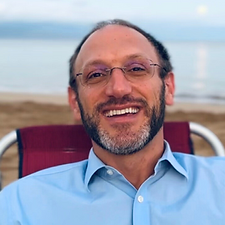
Dr. Justin Feinstein
Chief Science Officer
Clinical neuropsychologist. Internationally recognized leader in float therapy research and the neuroscience of fear, anxiety, and PTSD. Dozens of peer-reviewed publications. Former Director, Laureate Institute for Brain Research Float Research Center.

Tania von der Goltz
Chief Executive Officer
Former SVP and CFO of Fresenius, a global medical technology company across 40+ countries. Regulatory navigation, reimbursement strategy, international healthcare commercialization.
.jpg)
Dr. Abby Morris, M.D.
Medical Director
Board-certified psychiatrist. Medical Director, IAFF Center of Excellence for Behavioral Health. Has treated nearly 3,000 firefighters for PTSD, anxiety, and addiction. Direct access to 340,000+ professional firefighters across North America.
%20(2).jpg)
Toby Stanwell-Smith
Technical Lead
25+ years delivering floatation systems globally. Former Design Manager, Floataway. The engineering intelligence behind GCS's modular and deployable hardware platforms.

How to get involved.
GCS is building clinical infrastructure for nervous system recovery at scale. The science is peer-reviewed. The team is assembled.
The world's first deployable unit is built and on the way to help fire survivors and first responders on Maui. The first modular unit has been ordered for Sahib Khalsa's laboratory at UCLA.
We're in conversation with researchers, clinicians, institutional partners, and funders who understand what's at stake. If that's you, please reach out directly.